
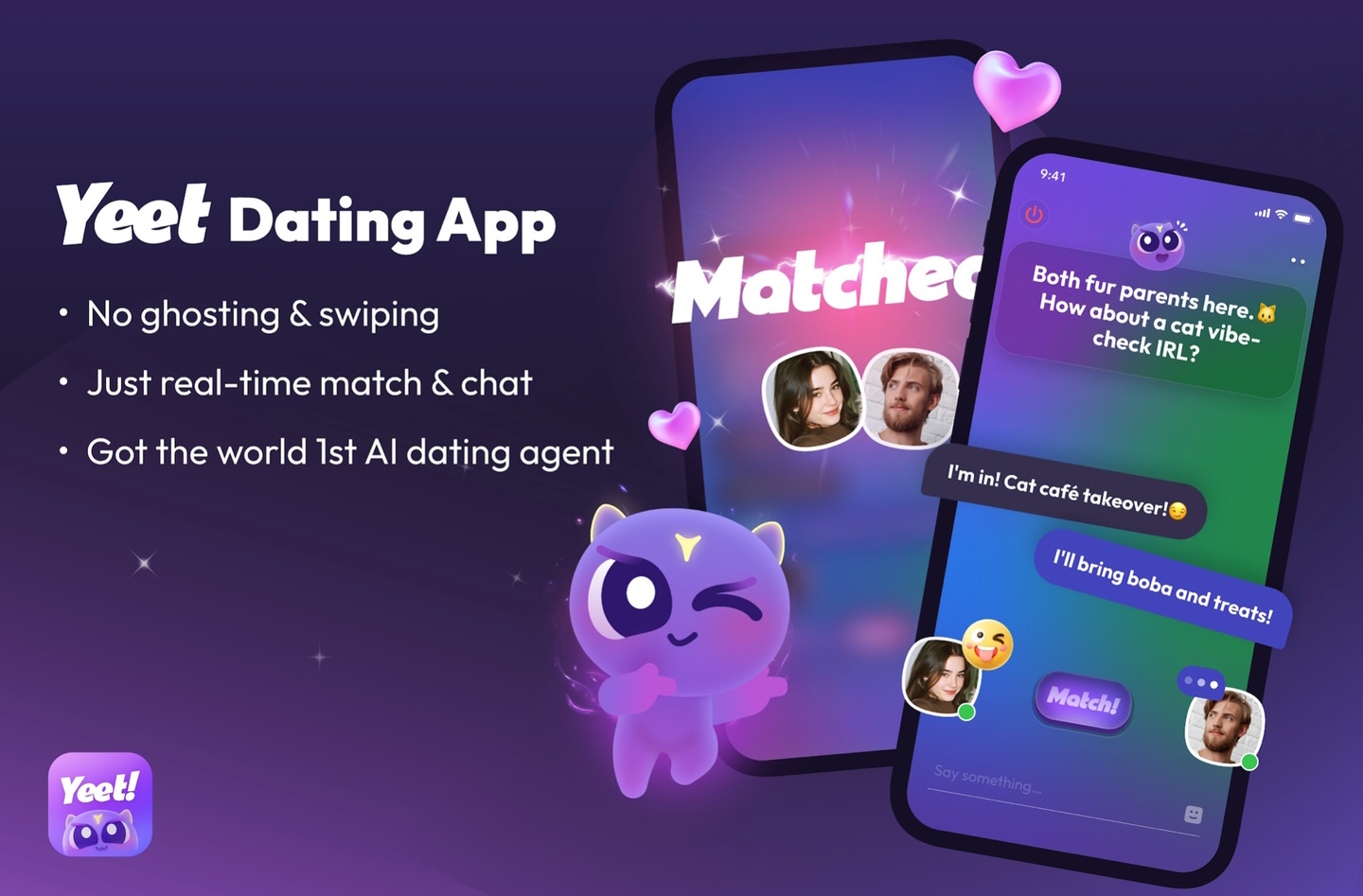
Yeet Dating App Continues to Grow Months After Launch
A few months after its public launch, Yeet is showing signs that its AI-first approach to online dating is resonating with younger users. Rather than competing directly with traditional swipe-based apps, the platform has focused on conversation, using its built-in AI assistant, Yeeta, to help users break the ice, keep chats moving and build profiles from photos and short prompts.
When Yeet first launched, the company positioned Yeeta as the world’s first AI dating agent, aiming to reduce common frustrations such as ghosting, repetitive opening messages and endless swiping. Instead of relying on likes and matches, the app encourages users to start conversations immediately, with Yeeta offering prompts, trivia games and suggestions when discussions begin to stall.
While the company has not released large-scale user figures since launch, early momentum has been notable. Ahead of its public release, Yeet reported more than 6,000 beta users and an active Discord community of over 1,600 early adopters who helped test new features and provide feedback.
Recent reviews suggest that Yeeta remains the app’s biggest differentiator. The AI can generate profile descriptions by analyzing uploaded photos, recommend conversation topics based on shared interests and step into chats when users request help. Reviewers have found the feature entertaining, although some noted that the AI can occasionally misinterpret images or repeat information that has already been discussed.
While AI is still a very controversial topic for many people, especially within the dating sphere, it’s telling that Yeet has survived the early period of a dating app having to kickstart its user base – boasting over 10k downloads on Google Play alone. Yeet enters a competitive online dating market at a time when many younger users are looking for alternatives to swipe-heavy experiences, anmd something about its specific use of AI must be resonating with its target audience, possibly the fact that the AI tools are not meant to replace the human conversations that the app is trying to facilitate.
