
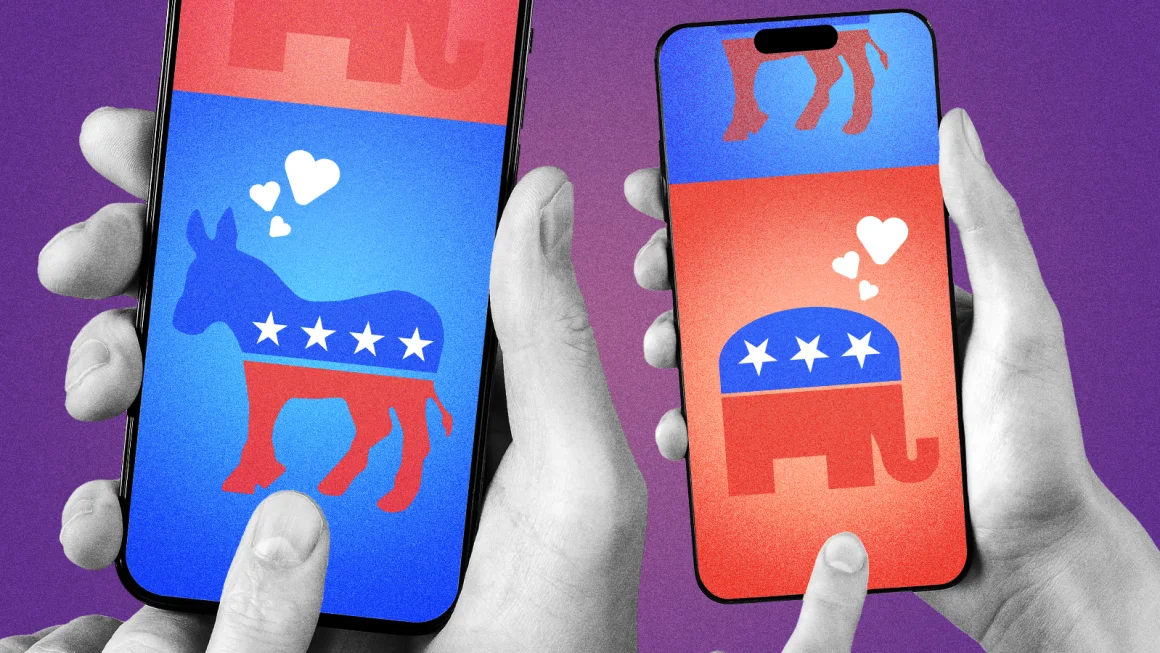
Political Affiliation Remains a Key Dating Filter for U.S. Singles
Political identity is increasingly becoming a screening factor in the U.S. dating market, with some singles treating party affiliation or views on President Donald Trump as a non-negotiable before agreeing to a date. For some users, political compatibility now appears alongside criteia like age, location, smoking, children, religion and shared interests – and in some cases comes first in that list, before any other factors.
South Florida matchmaker Cheryl Maida told USA TODAY Network-Florida that she began asking clients about political preferences after Trump entered the political spotlight in 2016. She said potential matches can be rejected after clients discover that a prospective partner is liberal or conservative, even when other aspects of their profiles appear compatible.
The trend also reflects broader changes in how people assess compatibility online. Daniel A. Cox, a pollster with the Survey Center of American Life, said younger singles, particularly women, increasingly consider politics when evaluating potential long-term partners. Political disagreements can also encompass issues such as reproductive rights and other questions that users regard as matters of personal values rather than conventional policy differences.
Dating apps may reinforce this behavior by giving users large numbers of potential matches and limited information with which to assess them. Without shared social circles or mutual acquaintances, political alignment can become a quick way to establish a sense of compatibility or eliminate potential matches.
The development comes amid wider concerns about the state of online dating, including declining participation among some younger adults, loneliness and dissatisfaction with app-based interactions. A 2026 report from the Wheatley Institute described a broader “dating recession,” while other research has examined how digital dating can make relationships more transactional and screen-mediated. Political barriers are just another factor that can keep users from trying specific apps or finding successful relationships, especially if apps have a reputation for being biased to one side of the poltiical spectrum.
Naturally, this problem can extend beyond the U.S. Particularly strong political leanings or controversial poltiical figures can become an important part of the chemistry between two people, with almost one third of Britons finding themselves difficult (or impossible) to date somebody with vastly diferent poltiical views.
